

Fabric AI
Use Fabric AI as the anchor for a real shortlist.
Instead of returning to a broad directory, jump straight into the strongest adjacent matchups for pricing, workflow fit, and differentiation.
Overview
Overview
Fabric AI is a purpose-built AI platform for warehouse and logistics automation. Designed to address the inefficiencies of manual warehouse management, it leverages machine learning and real-time data to automate workflows, reduce operational errors, and accelerate fulfillment cycles. The platform is aimed at warehouse managers, logistics coordinators, and operations leaders seeking to modernize their facilities with minimal disruption.
Key Features
- Workflow Automation Engine: Automates repetitive tasks such as order routing, inventory updates, and shipment scheduling, freeing staff to focus on higher-value activities.
- Real-Time Inventory Tracking: Provides live visibility into stock levels, locations, and movement, reducing the risk of stockouts or overstock.
- Predictive Analytics: Uses historical data to forecast demand, optimize stock replenishment, and suggest efficient pick-and-pack routes.
- Integration with WMS: Seamlessly connects with existing Warehouse Management Systems (WMS) and Enterprise Resource Planning (ERP) tools for smooth data flow.
- Dashboards & Reporting: Offers customizable dashboards with key performance metrics, enabling managers to monitor efficiency and identify bottlenecks.
- AI-Powered Insights: Generates actionable recommendations for layout optimization, labor allocation, and process improvements.
Use Cases
Warehouse Inventory Optimization
A distribution center uses Fabric AI to track inventory in real time and automatically reorder high-demand items. The predictive analytics feature helps reduce stockouts by 30% during peak seasons.
Automated Order Fulfillment
An e-commerce fulfillment center integrates Fabric AI with its order management system. The platform automatically assigns orders to the nearest available picker, updates tracking information, and schedules shipments without manual intervention.
Labor Allocation & Efficiency
A logistics provider employs Fabric AI to analyze workflow patterns and suggest optimal staffing levels per shift. This reduces overtime costs and ensures consistent throughput.
Layout Redesign Guidance
Warehouse managers use the AI’s insights to redesign storage layouts, placing fast-moving items closer to packing stations. The result is a 15% reduction in travel time for pickers.
Pricing & Plans
Fabric AI operates on a paid subscription model. Specific pricing tiers are not publicly disclosed; interested organizations must contact the sales team for a customized quote based on warehouse size, number of users, and required integrations.
Integrations & Compatibility
Fabric AI offers native integrations with popular Warehouse Management Systems (WMS) such as SAP EWM, Oracle WMS, and Manhattan Associates. It also supports connections to ERP platforms like NetSuite and SAP S/4HANA. The platform is accessible via a web-based dashboard and provides REST APIs for custom integrations.
Who Is It For?
Fabric AI is built for warehouse managers, logistics coordinators, supply chain analysts, and operations executives at mid-to-large organizations. It is especially suited for companies managing multiple facilities or high-volume order fulfillment environments.
Limitations
- Internet Reliance: The platform requires a stable internet connection for real-time features; offline fallback capabilities are limited.
- Integration Complexity: Initial integration with legacy WMS or ERP systems may require technical support and custom configuration.
- Data Quality Dependence: The accuracy of AI insights depends on the quality and consistency of input data, which may be a challenge for organizations with fragmented systems.
- No Native Mobile App: Currently, Fabric AI is only available via desktop web browser, limiting on-the-go access for floor supervisors.
Final Verdict
Fabric AI stands out as a focused solution for warehouse automation, offering practical features like real-time tracking and predictive analytics. Its strength lies in reducing manual effort and improving throughput. However, the lack of transparent pricing and reliance on a stable internet connection may be barriers for some organizations. Overall, Fabric AI is a solid choice for companies ready to invest in AI-driven operational efficiency in their warehouses.
Tool Facts
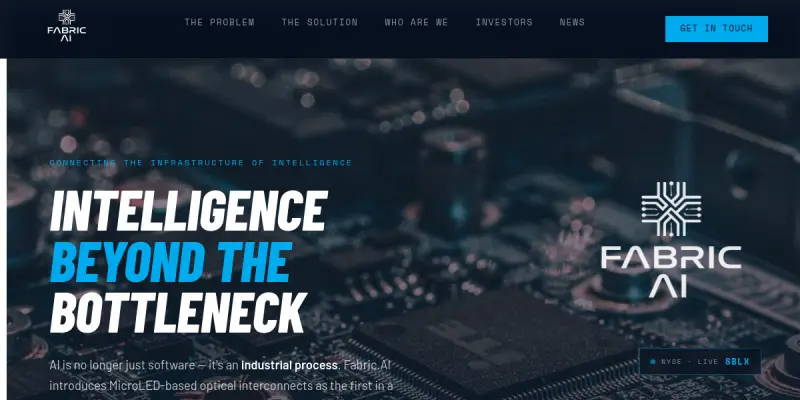
Screenshots & Interface
Pros
- ✓ Real-time inventory tracking reduces stockouts and overstock situations.
- ✓ Predictive analytics helps forecast demand and optimize stock replenishment.
- ✓ Seamless integration with major WMS/ERP platforms minimizes data silos.
- ✓ Customizable dashboards provide actionable insights for managers.
- ✓ Automates repetitive tasks such as order routing and shipment scheduling.
Cons
- × Requires a stable internet connection for real-time features, with limited offline fallback.
- × Initial integration with legacy systems may require technical support and custom configuration.
- × AI insights depend on the quality and consistency of input data from connected systems.
- × Lack of a native mobile app restricts on-the-go access for floor supervisors.
How to Use Fabric AI in Your Workflow
Integrating Fabric AI into your professional toolkit enhances efficiency by automating manual steps. By configuring it to suit your specific project requirements, you can optimize output quality and reduce project cycle times. Standard workflows involve testing the tool on simple tasks before scaling its use to complex operations.
Frequently Asked Questions
What is Fabric AI used for?
Fabric AI is an AI platform designed to optimize warehouse operations and logistics. It helps warehouse managers and logistics coordinators automate repetitive workflows, reduce errors, and improve throughput using AI-driven decision-making.
What is the pricing model for Fabric AI?
Fabric AI uses a Paid pricing model.
What are the main advantages of Fabric AI?
The key benefits of Fabric AI include: Real-time inventory tracking reduces stockouts and overstock situations., Predictive analytics helps forecast demand and optimize stock replenishment., Seamless integration with major WMS/ERP platforms minimizes data silos., Customizable dashboards provide actionable insights for managers., Automates repetitive tasks such as order routing and shipment scheduling..
What are the main limitations of Fabric AI?
Some limitations or cons of Fabric AI are: Requires a stable internet connection for real-time features, with limited offline fallback., Initial integration with legacy systems may require technical support and custom configuration., AI insights depend on the quality and consistency of input data from connected systems., Lack of a native mobile app restricts on-the-go access for floor supervisors..
Alternative AI Tools

Shippeo AI
Shippeo uses AI to provide real-time, multimodal transportation visibility for shippers and logistics providers. It helps track shipments across carriers, predict arrival times, and improve operational efficiency.

Covariant AI
Covariant AI provides robotic intelligence for warehouse picking and packing tasks. It trains 3D vision models to automate logistics workflows. Ideal for warehouse operations seeking to upgrade material handling automation.

Gatik AI
Gatik AI provides autonomous middle-mile logistics for B2B supply chains. Its AI-driven trucks operate on fixed routes without drivers.
Rating Details
Based on 0 ratings
Quick Comparisons
Related Tools
More AI tools from the same workflow, industry, or category.
fr3n
fr3n is a creator platform that combines a link-in-bio page, digital storefront, community spaces, and newsletters into one hub. It helps creators sell digital products, run memberships, and build an audience with first-party data.
Aveva AI
Aveva AI optimizes industrial processes and predictive maintenance by leveraging AI models to detect anomalies and support risk-based decision-making in manufacturing.
Paddle AI
Paddle AI streamlines billing, tax compliance, and revenue management for digital businesses. This SaaS platform automates financial operations, supporting global revenue generation for apps like n8n and AdGuard. It integrates essential payment processing tools into a single interface.
Honeywell Forge AI
Honeywell Forge is an industrial IoT platform that combines digital twin technology with AI to optimize facility operations. It is designed for industrial manufacturers seeking predictive maintenance and operational efficiency.
Reviews
No reviews submitted yet. Be the first to share your experience.
Write a Review
Share Your Experience
Join the community to write reviews, submit ratings, and bookmark your favorite AI tools.