Articles & Workflows

In-depth guides, comparison reports, and tutorials on the latest AI tools and automation strategies.

Browse editorial content that helps you understand the AI landscape, compare options, and apply practical workflows in your own projects.

Browse article categories
Categories & filters Tap to expand
AI Evaluation Pipelines Explained: Why Testing Beats Prompt Guesswork AI Workflows
Sep 30, 2026 • By Dave Dotio

AI Evaluation Pipelines Explained: Why Testing Beats Prompt Guesswork

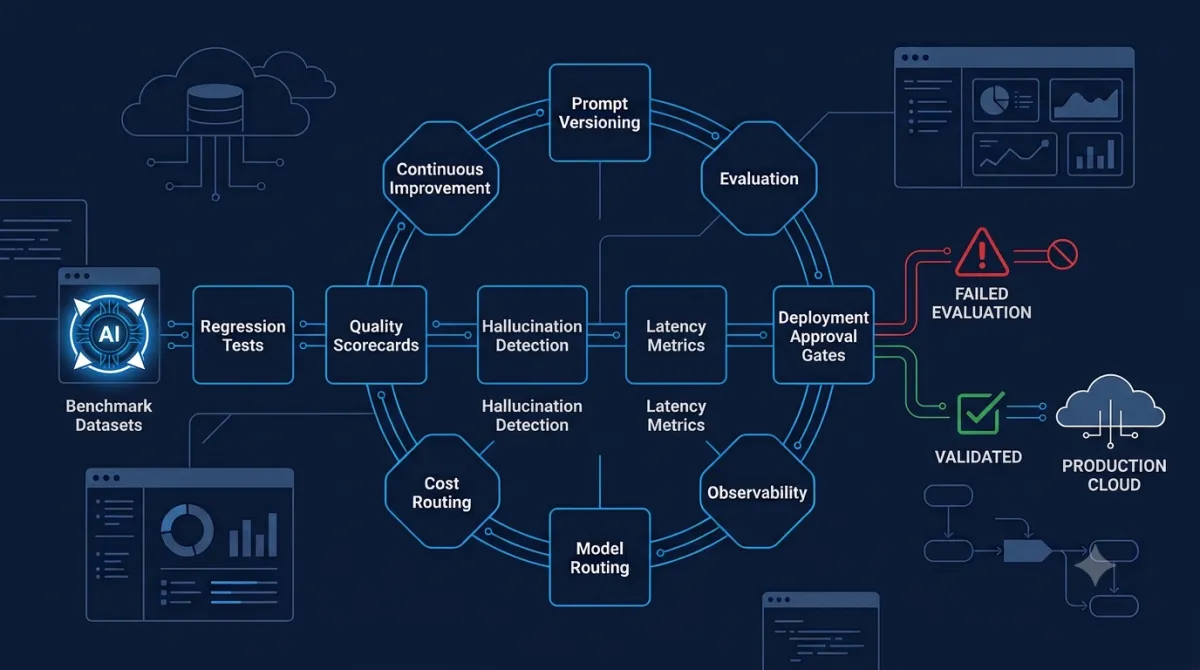
For many AI teams, improving an application still means rewriting prompts and hoping the outputs get better. One version seems more accurate, another feels more natural, and a third performs well on a few examples—but nobody knows whether the overall system has actually improved. That approach doesn't scale. As AI applications become business-critical, engineering teams are replacing intuition with automated evaluation pipelines. Instead of relying on subjective comparisons, they measure quality against representative datasets, regression tests, and production metrics before every deployment. This guide explains how AI evaluation pipelines work, why they're becoming a core part of LLMOps, and how they enable continuous improvement without guesswork.
Read full guide
The End of Single-Model AI: Why Multi-Model Architectures Are Becoming the Default AI Models
Sep 28, 2026 • By Dave Dotio

The End of Single-Model AI: Why Multi-Model Architectures Are Becoming the Default

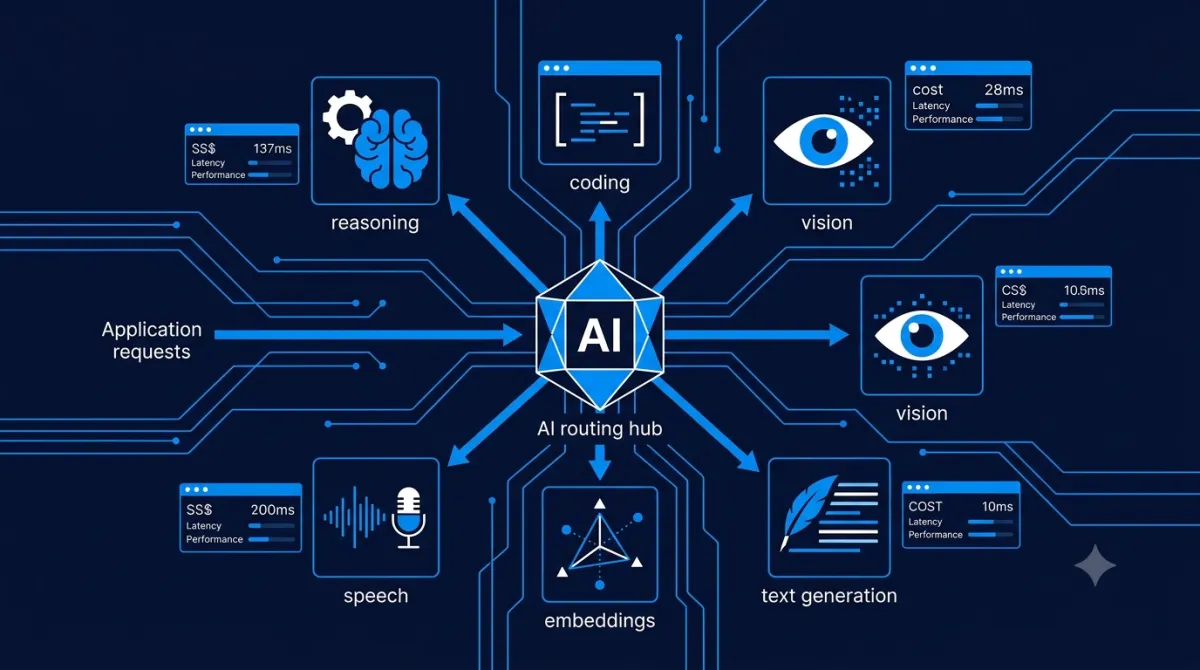
For the first wave of generative AI, choosing the "best" language model was one of the most important architectural decisions. Organizations debated GPT versus Claude, Gemini versus open-source models, searching for a single model capable of handling every workload. That mindset is rapidly disappearing. Production AI platforms increasingly use multiple models simultaneously, routing each request to the model best suited for the task. A lightweight model might classify emails, a reasoning model could analyze contracts, and a coding model may generate software—all within the same application. This shift toward multi-model architecture is redefining how enterprise AI systems are designed, optimized, and operated.

Read full guide
LLMOps Explained: The Operational Framework Behind Production AI AI Business & Industry
Sep 27, 2026 • By Dave Dotio

LLMOps Explained: The Operational Framework Behind Production AI

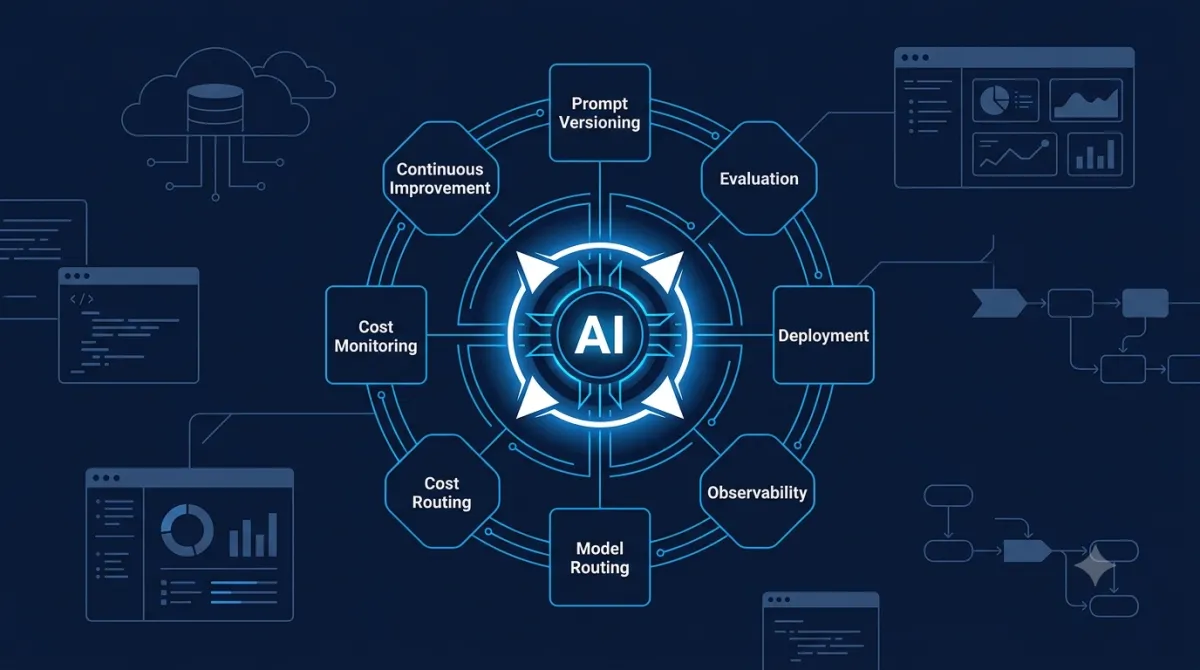
Building an AI application is only the beginning. The real challenge starts after deployment, when prompts evolve, models change, costs fluctuate, and thousands of users depend on consistent performance. Traditional software engineering has DevOps. Machine learning has MLOps. Large language model applications are giving rise to a new operational discipline: LLMOps. LLMOps isn't a single tool or framework. It's a collection of engineering practices for deploying, monitoring, evaluating, securing, and continuously improving AI systems in production. This guide explains what LLMOps is, how it differs from MLOps, and why it's becoming an essential capability for organizations building AI at scale.

Read full guide
AI Business & Industry
Sep 25, 2026 • By Dave Dotio

From Prompts to Policies: How Enterprises Are Standardizing AI Behavior

The first wave of enterprise AI focused on writing better prompts. The next wave is focused on ensuring every AI system behaves consistently, securely, and predictably. As organizations deploy AI across customer support, software development, sales, legal, and operations, prompt engineering alone is no longer enough. Teams need shared rules governing how AI should respond, what information it can access, which models it may use, and when human approval is required. These reusable policies are becoming a foundational layer of enterprise AI architecture, separating business governance from application logic. This guide explores why AI behavior is shifting from handcrafted prompts to centrally managed policies.

Read full guide
Designing AI Systems That Fail Gracefully: A Practical Guide to Resilient AI Architecture AI Workflows
Sep 24, 2026 • By Dave Dotio

Designing AI Systems That Fail Gracefully: A Practical Guide to Resilient AI Architecture

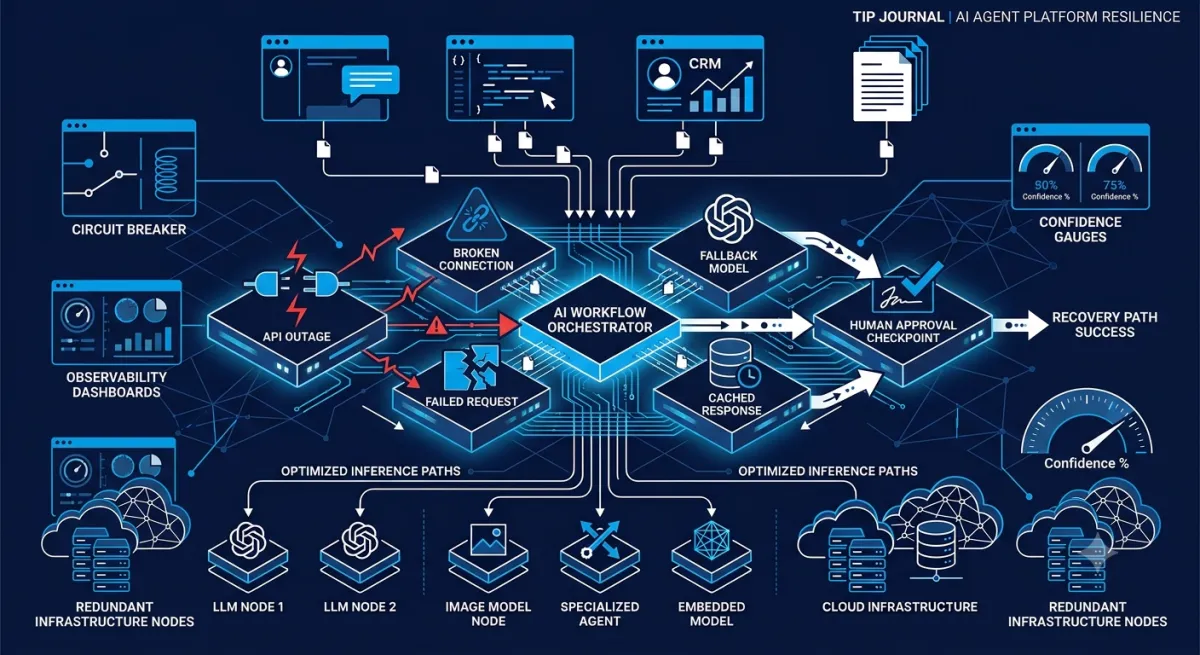
The most important question in AI engineering isn't "How intelligent is the model?" It's "What happens when the model fails?" Production AI systems operate in unpredictable environments. APIs become unavailable, vector databases return incomplete results, models hallucinate, tools time out, and providers experience outages. Yet many AI applications are still designed as if every component will work perfectly. Reliable AI platforms embrace a different philosophy: failure is inevitable. Instead of trying to eliminate every failure, engineering teams design systems that detect problems, recover automatically, and degrade gracefully without disrupting users. This guide explores the architectural patterns that make resilient AI systems possible.

Read full guide
The AI Stack Explained: Every Layer From Infrastructure to Intelligent Applications AI Models
Sep 18, 2026 • By Dave Dotio

The AI Stack Explained: Every Layer From Infrastructure to Intelligent Applications

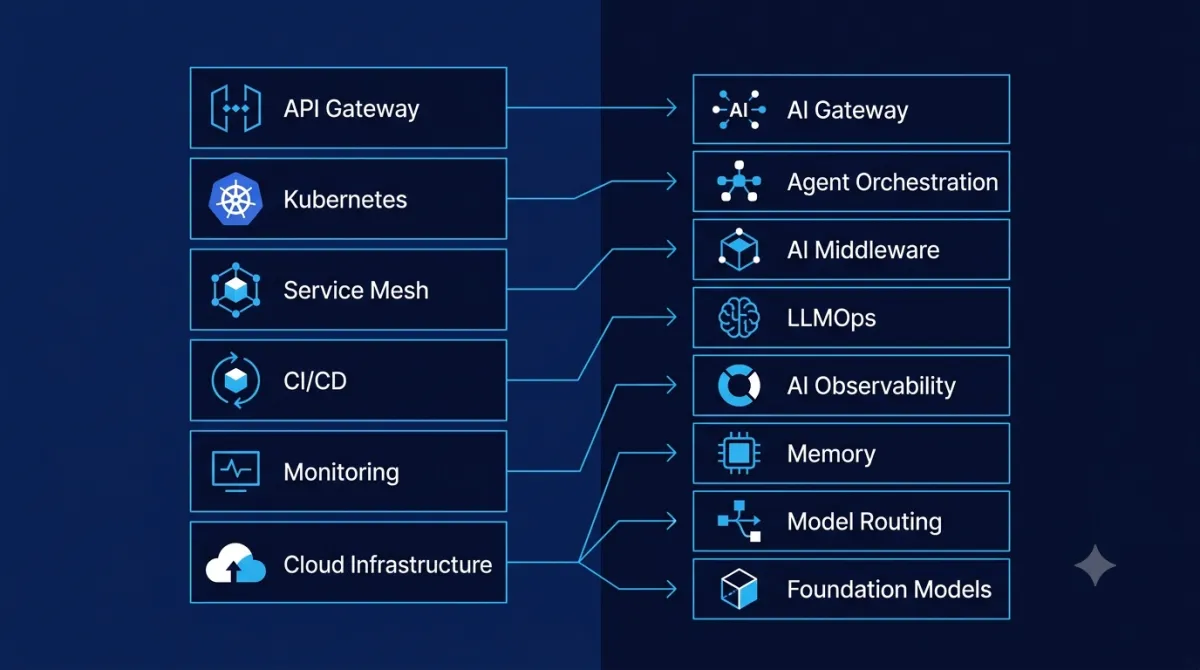
When people discuss AI systems, they often focus on a single layer: the language model. Yet modern AI applications are built on an increasingly sophisticated stack of technologies that extends far beyond GPT, Claude, Gemini, or open-source models. A production AI platform combines infrastructure, models, gateways, memory, retrieval systems, evaluation pipelines, observability, governance, orchestration, and user-facing applications. Each layer solves a different problem, and understanding how they fit together is becoming essential for AI engineers, architects, and technical leaders. This guide breaks down the complete AI stack and explains how every layer contributes to building scalable, reliable, and enterprise-ready AI systems.

Read full guide