

Infoblox AI
Use Infoblox AI as the anchor for a real shortlist.
Instead of returning to a broad directory, jump straight into the strongest adjacent matchups for pricing, workflow fit, and differentiation.
Overview
Overview
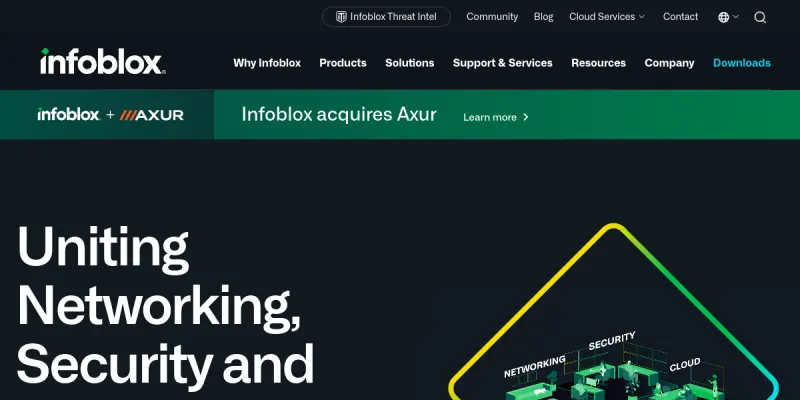
Infoblox AI is an AI-enhanced DDI (DNS, DHCP, IP Address Management) platform designed to help organizations unify networking, security, and cloud operations. By applying machine learning and automation, the platform reduces manual configuration, improves threat detection, and ensures consistent policy enforcement across hybrid and multi-cloud environments. Infoblox AI targets enterprise IT and network security teams who need to manage critical network infrastructure at scale.
Key Features
- AI-Driven Automation: Infoblox AI automates routine DDI tasks such as IP address allocation, DNS record updates, and DHCP scope management, reducing manual errors and operational overhead.
- Unified Visibility: The platform provides a single pane of glass for DNS, DHCP, and IPAM across on-premises, cloud, and hybrid environments, enabling faster troubleshooting and planning.
- Threat Intelligence Integration: Infoblox AI ingests threat intelligence feeds and correlates DNS query data to identify malicious domains, C2 communications, and DNS tunneling activities.
- Policy Enforcement: Users can define and enforce consistent network security policies across all environments, ensuring compliance with internal standards and external regulations.
- Cloud-Ready: Native integration with AWS, Azure, and Google Cloud allows seamless extension of DDI services into cloud VPCs and subnets without requiring separate tools.
- API-First Architecture: Infoblox AI exposes a comprehensive RESTful API for integration with existing ITSM, SIEM, and automation workflows, enabling custom scripting and toolchain connectivity.
Use Cases
Enterprise Network Management
Large organizations with complex, multi-site networks use Infoblox AI to centralize DDI management, reduce configuration drift, and gain real-time visibility into IP address usage. IT teams can automate IP lifecycle management and quickly respond to network changes.
Security Operations
Security analysts leverage Infoblox AI's threat intelligence to detect and block DNS-based threats, such as malware callbacks or data exfiltration. The platform can automatically update DNS firewalls and blocklists based on threat feeds, reducing response times.
Cloud Migration and Hybrid Cloud
Organizations migrating workloads to the cloud use Infoblox AI to extend on-premises DDI services into AWS, Azure, and Google Cloud. This ensures consistent DNS resolution and IP management across all environments, simplifying cloud adoption and reducing operational complexity.
Pricing & Plans
Infoblox AI is a paid platform with pricing typically based on the number of managed objects (e.g., IP addresses, DNS zones) and deployment scale. Public pricing is not disclosed; interested organizations must contact sales for a customized quote. A free trial may be available through the Infoblox website or partner programs.
Integrations & Compatibility
Infoblox AI integrates with major cloud providers (AWS, Azure, Google Cloud), SIEM tools (Splunk, QRadar), ITSM platforms (ServiceNow), and infrastructure automation tools (Ansible, Terraform). It also supports standard protocols (DNS, DHCP, RADIUS) and exposes a RESTful API for custom integrations.
Who Is It For?
Infoblox AI is designed for enterprise IT administrators, network engineers, and security operations teams who manage large, distributed network infrastructures. It is also suitable for managed service providers (MSPs) who need to deliver DDI services to multiple tenants.
Limitations
- Complex Setup: Initial configuration and deployment can be complex, requiring dedicated training or professional services for full optimization.
- Dependency on Network Health: The platform's effectiveness relies on stable network connectivity and proper DNS infrastructure.
- Cost Considerations: For small businesses, the enterprise-focused pricing may be prohibitive, and feature sets may include capabilities that are unnecessary for simpler environments.
Final Verdict
Infoblox AI is a robust DDI platform that brings AI-powered automation and security to enterprise network management. Its strengths lie in unifying visibility across hybrid environments, integrating threat intelligence, and reducing manual overhead. However, its complexity and cost make it best suited for large organizations with dedicated IT and security teams. For smaller businesses, simpler or open-source DDI tools may be more appropriate.
Tool Facts
Screenshots & Interface
Pros
- ✓ Infoblox AI unifies DDI management across on-premises and cloud environments, reducing operational complexity.
- ✓ The platform integrates real-time threat intelligence to detect and block DNS-based attacks automatically.
- ✓ AI-driven automation of routine DDI tasks reduces manual errors and frees up IT teams for higher-value work.
- ✓ Support for major cloud providers (AWS, Azure, Google Cloud) enables consistent policy enforcement in hybrid setups.
- ✓ The RESTful API allows seamless integration with existing ITSM, SIEM, and automation tools.
Cons
- × Initial setup and configuration can be complex, often requiring professional services or dedicated training.
- × Public pricing is not transparent, and enterprise-focused costs may be prohibitive for small organizations.
- × The platform's effectiveness is tied to network health and proper DNS infrastructure, limiting its value in poorly managed networks.
- × Some AI features may require a subscription tier, restricting access to advanced capabilities for lower-tier users.
How to Use Infoblox AI in Your Workflow
Integrating Infoblox AI into your professional toolkit enhances efficiency by automating manual steps. By configuring it to suit your specific project requirements, you can optimize output quality and reduce project cycle times. Standard workflows involve testing the tool on simple tasks before scaling its use to complex operations.
Frequently Asked Questions
What is Infoblox AI used for?
Infoblox AI is an AI-powered DDI platform that automates network management across hybrid environments. It helps IT teams integrate, automate, and secure critical network services. Its key differentiator is unified visibility and control for networking, security, and cloud operations.
What is the pricing model for Infoblox AI?
Infoblox AI uses a Paid pricing model.
What are the main advantages of Infoblox AI?
The key benefits of Infoblox AI include: Infoblox AI unifies DDI management across on-premises and cloud environments, reducing operational complexity., The platform integrates real-time threat intelligence to detect and block DNS-based attacks automatically., AI-driven automation of routine DDI tasks reduces manual errors and frees up IT teams for higher-value work., Support for major cloud providers (AWS, Azure, Google Cloud) enables consistent policy enforcement in hybrid setups., The RESTful API allows seamless integration with existing ITSM, SIEM, and automation tools..
What are the main limitations of Infoblox AI?
Some limitations or cons of Infoblox AI are: Initial setup and configuration can be complex, often requiring professional services or dedicated training., Public pricing is not transparent, and enterprise-focused costs may be prohibitive for small organizations., The platform's effectiveness is tied to network health and proper DNS infrastructure, limiting its value in poorly managed networks., Some AI features may require a subscription tier, restricting access to advanced capabilities for lower-tier users..
Alternative AI Tools
ESET AI
ESET AI enhances cybersecurity operations by automating threat detection and response using autonomous intelligence and expert-backed analysis.

NetScout AI
NetScout AI provides an AI-ready data platform for network observability and cybersecurity. It offers end-to-end visibility to secure infrastructure against DDoS attacks and simplify AIOps workflows.

Webroot AI
Webroot AI provides AI-driven endpoint protection to detect and neutralize cyber threats. It automates threat response workflows for security teams.
Rating Details
Based on 0 ratings
Quick Comparisons
Related Tools
More AI tools from the same workflow, industry, or category.
ImmuniWeb AI
ImmuniWeb AI automates security testing for web applications and APIs using artificial intelligence. It identifies vulnerabilities and security weaknesses in software. This SaaS platform offers both free and paid tiers for comprehensive coverage.
Armor Code AI
Armor Code's AI-powered platform helps security teams unify and prioritize application security findings. It automates remediation workflows to reduce manual effort and speed up vulnerability response.
Carbon Black AI
Carbon Black AI provides AI endpoint security for businesses, helping IT teams detect and respond to advanced threats in real time. It offers a freemium tier suitable for small to mid-sized organizations.
Contrast Security AI
Contrast Security AI offers runtime application self-protection (RASP) and static analysis to secure software from the inside out. It identifies vulnerabilities during development and deployment. The platform integrates deeply into CI/CD pipelines for continuous monitoring.
Reviews
No reviews submitted yet. Be the first to share your experience.
Write a Review
Share Your Experience
Join the community to write reviews, submit ratings, and bookmark your favorite AI tools.