

OpenCTI AI
Use OpenCTI AI as the anchor for a real shortlist.
Instead of returning to a broad directory, jump straight into the strongest adjacent matchups for pricing, workflow fit, and differentiation.
Overview
Overview
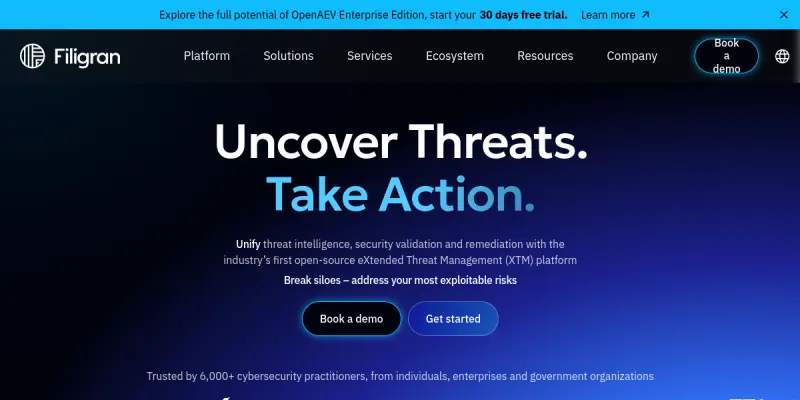
OpenCTI AI, developed by Filigran, is an open-source cyber threat intelligence platform designed to streamline the entire threat management lifecycle. By integrating advanced AI models with the OpenCTI ecosystem, it enables security teams to automate the detection of threats, analyze indicators of compromise (IOCs), and manage investigations more effectively. The tool focuses on proactive security, allowing organizations to anticipate threats before they escalate into full-blown security incidents.
Key Features
- AI-Driven Threat Detection: Utilizes machine learning to identify patterns and anomalies in network traffic and data feeds.
- OpenCTI Integration: Native integration with the OpenCTI platform ensures compatibility with existing threat intelligence workflows and data models.
- Automated Triage: Streamlines the process of categorizing and prioritizing security alerts to reduce alert fatigue.
- Investigation Workflows: Provides a structured environment for security analysts to document and track investigations.
- Open Source Flexibility: The open-source nature allows for custom deployment, full data sovereignty, and community-driven improvements.
- Threat Graph Visualization: Maps relationships between entities to uncover complex attack chains.
Use Cases
Threat Hunting
Security analysts use OpenCTI AI to proactively hunt for threats within their infrastructure by analyzing telemetry data and identifying suspicious behaviors that automated rules might miss.
Incident Response
Teams leverage the platform to accelerate the response to security incidents by automatically correlating alerts and suggesting remediation steps based on historical threat intelligence.
Threat Intelligence Analysis
Researchers utilize the tool to ingest, analyze, and share IOCs and malware samples with the broader security community, improving collective defense.
Malware Analysis
The platform assists in correlating malware samples with other indicators to understand the scope and impact of a threat campaign.
Pricing & Plans
OpenCTI AI operates on a Free / Open Source model. Users can self-host the solution at no cost, ensuring complete data privacy and control over their security infrastructure. While the software itself is free, organizations must account for the infrastructure costs associated with hosting and maintaining the application.
Integrations & Compatibility
The tool is built to integrate deeply with the OpenCTI platform. It supports API access for custom integrations with other security tools such as SIEMs, EDRs, and threat intelligence feeds. Compatibility is primarily focused on cloud and on-premise environments suitable for enterprise deployment.
Who Is It For?
This tool is designed for cybersecurity professionals, including SOC analysts, threat intelligence researchers, and Chief Information Security Officers (CISOs) who require a flexible, self-hosted solution for managing cyber threats.
Limitations
- Technical Complexity: Setting up and maintaining an open-source platform requires significant technical expertise and DevOps resources.
- Data Dependency: The accuracy of AI-driven insights depends heavily on the quality and volume of data fed into the system.
- Support Limitations: As an open-source tool, official support is community-driven rather than through a dedicated enterprise helpdesk.
Final Verdict
OpenCTI AI represents a robust choice for organizations that prioritize data privacy and flexibility in their threat management stack. Its open-source foundation combined with AI capabilities offers a powerful alternative to proprietary solutions, provided the team has the necessary technical capacity to manage the deployment.
Tool Facts
Screenshots & Interface
Pros
- ✓ Open-source architecture allows for full data control and customization
- ✓ Deep integration with the OpenCTI ecosystem streamlines existing workflows
- ✓ AI automation reduces the manual workload for security analysts
- ✓ Self-hosting capability ensures data sovereignty and compliance
Cons
- × Steep learning curve associated with self-hosting and configuring the platform
- × Requires ongoing maintenance and updates to ensure security and performance
- × Community support may be slower than commercial vendor support
- × Scalability challenges can occur when processing very large datasets
How to Use OpenCTI AI in Your Workflow
Integrating OpenCTI AI into your professional toolkit enhances efficiency by automating manual steps. By configuring it to suit your specific project requirements, you can optimize output quality and reduce project cycle times. Standard workflows involve testing the tool on simple tasks before scaling its use to complex operations.
Frequently Asked Questions
What is OpenCTI AI used for?
OpenCTI AI by Filigran is an open-source cyber threat intelligence platform that leverages AI to automate threat detection and response. It integrates seamlessly with OpenCTI to enhance security operations.
What is the pricing model for OpenCTI AI?
OpenCTI AI uses a Free / Open Source pricing model.
What are the main advantages of OpenCTI AI?
The key benefits of OpenCTI AI include: Open-source architecture allows for full data control and customization, Deep integration with the OpenCTI ecosystem streamlines existing workflows, AI automation reduces the manual workload for security analysts, Self-hosting capability ensures data sovereignty and compliance.
What are the main limitations of OpenCTI AI?
Some limitations or cons of OpenCTI AI are: Steep learning curve associated with self-hosting and configuring the platform, Requires ongoing maintenance and updates to ensure security and performance, Community support may be slower than commercial vendor support, Scalability challenges can occur when processing very large datasets.
Alternative AI Tools

IDenfy AI
iDenfy AI is an identity verification service that automates user onboarding with AI-powered document and biometric checks. It helps businesses mitigate fraud and comply with Know Your Customer (KYC) and Anti-Money Laundering (AML) regulations. A key differentiator is its instant verification and global document coverage.

TheHive AI
Hive provides a suite of pre-trained AI APIs for content moderation, safety, and analysis across text, images, and video.

Imperva AI
Imperva AI is a cybersecurity platform that protects data and applications both on-premises and in the cloud. It offers AI-driven threat detection and remediation for enterprise security teams. A key differentiator is its application-layer intelligence combined with an adaptive machine learning engine.
Rating Details
Based on 0 ratings
Quick Comparisons
Related Tools
More AI tools from the same workflow, industry, or category.
fr3n
fr3n is a creator platform that combines a link-in-bio page, digital storefront, community spaces, and newsletters into one hub. It helps creators sell digital products, run memberships, and build an audience with first-party data.
Aveva AI
Aveva AI optimizes industrial processes and predictive maintenance by leveraging AI models to detect anomalies and support risk-based decision-making in manufacturing.
Paddle AI
Paddle AI streamlines billing, tax compliance, and revenue management for digital businesses. This SaaS platform automates financial operations, supporting global revenue generation for apps like n8n and AdGuard. It integrates essential payment processing tools into a single interface.
Honeywell Forge AI
Honeywell Forge is an industrial IoT platform that combines digital twin technology with AI to optimize facility operations. It is designed for industrial manufacturers seeking predictive maintenance and operational efficiency.
Reviews
No reviews submitted yet. Be the first to share your experience.
Write a Review
Share Your Experience
Join the community to write reviews, submit ratings, and bookmark your favorite AI tools.