

DataRPM AI
Use DataRPM AI as the anchor for a real shortlist.
Instead of returning to a broad directory, jump straight into the strongest adjacent matchups for pricing, workflow fit, and differentiation.
Overview
Overview
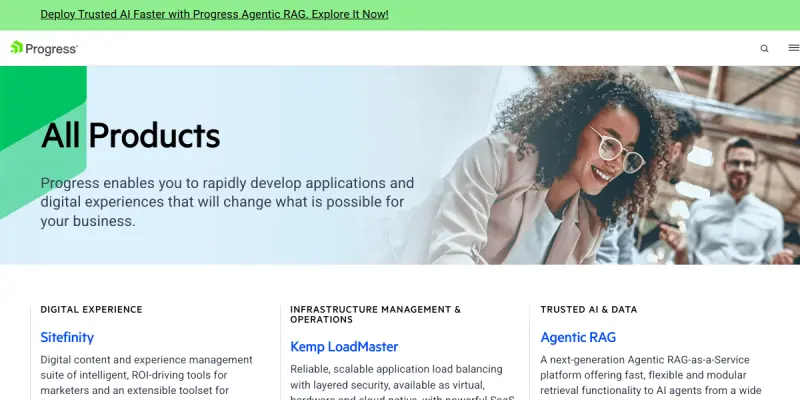
DataRPM AI is a specialized AI platform developed by Progress Software that brings machine learning and predictive analytics to manufacturing environments. It focuses on quality control, defect detection, and process optimization, allowing manufacturers to catch issues early and reduce waste. The platform is designed to integrate with existing industrial systems, providing real-time insights without requiring a complete overhaul of current workflows.
Key Features
- Real-Time Defect Detection: Uses computer vision and sensor data to identify product defects as they occur on the production line, enabling immediate corrective action.
- Predictive Maintenance: Analyzes equipment data to forecast when machines are likely to fail, helping schedule maintenance before breakdowns happen.
- Process Optimization: Recommends adjustments to production parameters to improve yield, reduce energy consumption, and minimize scrap.
- Visual Dashboard: Provides a clear, at-a-glance view of production metrics, defect rates, and equipment health status.
- Integration with Industrial Systems: Connects directly with PLCs, SCADA systems, and existing MES for seamless data ingestion.
- Custom Model Training: Allows users to train AI models on their own historical production data for more accurate predictions.
Use Cases
Quality Control in Automotive Manufacturing
An automotive parts supplier uses DataRPM AI to inspect thousands of components per hour for micro-fractures and dimensional inconsistencies. The system flags defective parts in real time, reducing manual inspection labor and preventing faulty parts from reaching customers.
Predictive Maintenance in Food Processing
A food processing plant integrates DataRPM AI with its packaging machinery. The AI monitors vibration and temperature patterns, predicting bearing failures two weeks in advance. This enables the maintenance team to replace parts during scheduled downtime instead of emergency shutdowns.
Yield Optimization in Electronics Assembly
An electronics manufacturer uses the platform to analyze solder paste printing and component placement data. The AI identifies subtle process drift and suggests reflow oven temperature adjustments, increasing first-pass yield by 8%.
Pricing & Plans
Pricing for DataRPM AI is not publicly disclosed on the Progress website. Interested organizations are required to contact Progress Software's sales team for a customized quote based on deployment size, number of production lines, and required integrations.
Integrations & Compatibility
DataRPM AI integrates with a range of industrial systems including PLCs (Siemens, Rockwell), SCADA platforms, and manufacturing execution systems (MES). It supports common data protocols such as OPC-UA and MQTT. The platform is cloud-hosted but can also be deployed on-premises for sensitive environments.
Who Is It For?
This tool is primarily designed for manufacturing engineers, quality assurance managers, and plant supervisors in mid-to-large industrial facilities. It is also suitable for operations leaders in discrete and process manufacturing sectors such as automotive, electronics, food and beverage, and pharmaceuticals.
Limitations
- Setup and model training require historical data that may not be readily available in all facilities.
- The tool is focused on manufacturing use cases and may not be suitable for non-industrial applications.
- Pricing is opaque, requiring direct sales interaction, which may be a barrier for smaller companies.
- Advanced features may have a learning curve for teams without data science experience.
Final Verdict
DataRPM AI is a capable industrial AI platform for manufacturers who already have some data infrastructure in place. Its strengths lie in real-time defect detection and predictive maintenance. However, the lack of transparent pricing and dependency on existing data quality may limit its accessibility for smaller operations or those just beginning their AI journey.
Tool Facts
Screenshots & Interface
Pros
- ✓ Real-time defect detection reduces manual inspection labor and catches issues immediately.
- ✓ Predictive maintenance forecasts equipment failures, minimizing unplanned downtime.
- ✓ Integrates with common industrial systems such as PLCs and SCADA for seamless data ingestion.
- ✓ Custom model training allows users to tailor AI predictions to their specific production data.
Cons
- × Setup and model training require existing historical production data, which may not be available in all facilities.
- × Pricing is not transparent; interested buyers must contact sales for a quote.
- × The platform is narrowly focused on manufacturing, limiting its use for other industries.
- × Advanced features may have a learning curve for teams without data science experience.
How to Use DataRPM AI in Your Workflow
Integrating DataRPM AI into your professional toolkit enhances efficiency by automating manual steps. By configuring it to suit your specific project requirements, you can optimize output quality and reduce project cycle times. Standard workflows involve testing the tool on simple tasks before scaling its use to complex operations.
Frequently Asked Questions
What is DataRPM AI used for?
DataRPM AI by Progress Software is a suite of AI tools that helps manufacturers automate quality control and production processes. It uses machine learning to identify defects and optimize operations. The platform is designed for manufacturing teams seeking to improve efficiency and reduce downtime.
What is the pricing model for DataRPM AI?
DataRPM AI uses a Paid pricing model.
What are the main advantages of DataRPM AI?
The key benefits of DataRPM AI include: Real-time defect detection reduces manual inspection labor and catches issues immediately., Predictive maintenance forecasts equipment failures, minimizing unplanned downtime., Integrates with common industrial systems such as PLCs and SCADA for seamless data ingestion., Custom model training allows users to tailor AI predictions to their specific production data..
What are the main limitations of DataRPM AI?
Some limitations or cons of DataRPM AI are: Setup and model training require existing historical production data, which may not be available in all facilities., Pricing is not transparent; interested buyers must contact sales for a quote., The platform is narrowly focused on manufacturing, limiting its use for other industries., Advanced features may have a learning curve for teams without data science experience..
Alternative AI Tools
Cognite AI
Cognite AI is an industrial AI platform that unifies operational data to improve productivity, safety, and performance. It is designed for engineers and data scientists in manufacturing, energy, and process industries who need to build and scale AI applications on trustworthy data. Its key differentiator is its ability to contextualize and structure complex industrial data without heavy manual effort.
GE Digital AI
GE Digital AI accelerates electrification and decarbonization across industries while supporting operational goals. It provides digital solutions for global sustainability initiatives.

National Instruments AI
National Instruments AI provides automated test and measurement systems for engineers and manufacturers. It leverages AI to optimize testing workflows and improve product quality in industrial settings.
Rating Details
Based on 0 ratings
Related Tools
More AI tools from the same workflow, industry, or category.
fr3n
fr3n is a creator platform that combines a link-in-bio page, digital storefront, community spaces, and newsletters into one hub. It helps creators sell digital products, run memberships, and build an audience with first-party data.
Aveva AI
Aveva AI optimizes industrial processes and predictive maintenance by leveraging AI models to detect anomalies and support risk-based decision-making in manufacturing.
Paddle AI
Paddle AI streamlines billing, tax compliance, and revenue management for digital businesses. This SaaS platform automates financial operations, supporting global revenue generation for apps like n8n and AdGuard. It integrates essential payment processing tools into a single interface.
Honeywell Forge AI
Honeywell Forge is an industrial IoT platform that combines digital twin technology with AI to optimize facility operations. It is designed for industrial manufacturers seeking predictive maintenance and operational efficiency.
Reviews
No reviews submitted yet. Be the first to share your experience.
Write a Review
Share Your Experience
Join the community to write reviews, submit ratings, and bookmark your favorite AI tools.