

Sight Machine AI
Use Sight Machine AI as the anchor for a real shortlist.
Instead of returning to a broad directory, jump straight into the strongest adjacent matchups for pricing, workflow fit, and differentiation.
Overview
Overview
Sight Machine AI is a manufacturing analytics platform designed to unify factory-floor data into a single, AI-ready foundation. It enables operations teams to deploy artificial intelligence agents that connect, structure, and analyze plant data from diverse sources. The platform aims to reduce the time and complexity typically associated with implementing AI in manufacturing environments, promising deployment within weeks.
Key Features
- Unified Data Foundation: Ingests data from multiple factory systems (e.g., SCADA, MES, PLCs) into one consistent data model, eliminating silos.
- AI Agents: Pre-built agents that automate data structuring, anomaly detection, and root-cause analysis without requiring extensive coding.
- Rapid Deployment: Designed to go live on the factory floor in weeks rather than months, with minimal disruption to existing operations.
- Scalable Architecture: Handles data from a single line up to an entire enterprise, supporting growth without performance degradation.
- Real-Time Analytics: Provides dashboards and alerts on key process metrics, enabling proactive decision-making.
- Integration Ecosystem: Connects with common industrial systems and databases via standard protocols (OPC UA, MQTT, REST APIs).
Use Cases
Quality Defect Detection
Manufacturers can use Sight Machine AI to automatically flag quality deviations on the production line. By analyzing sensor data and historical defect patterns, the platform helps reduce scrap and rework.
Predictive Maintenance
Operations teams can monitor equipment health in real time and predict failures before they occur. This minimizes unplanned downtime and extends asset life.
Process Optimization
Production managers can identify bottlenecks and inefficiencies by correlating data across multiple stages. The AI agents suggest parameter adjustments to improve throughput.
Compliance & Reporting
Sight Machine AI can generate audit-ready reports on production metrics, helping manufacturers meet regulatory standards (e.g., ISO 9001) with less manual effort.
Pricing & Plans
Sight Machine AI operates on a freemium pricing model. Basic access is available at no cost, with limited features and data volume. Advanced capabilities, such as full enterprise integration and dedicated support, require a paid subscription. Specific pricing for paid tiers is not publicly disclosed; interested teams should contact sales.
Integrations & Compatibility
The platform supports integration with major industrial automation systems including Siemens, Rockwell Automation, and Fanuc. It also interfaces with common databases (SQL, NoSQL) and cloud services (AWS, Azure). Standard protocols such as OPC UA and MQTT are supported for data ingestion.
Who Is It For?
Sight Machine AI is built for manufacturing operations managers, plant engineers, and quality assurance teams. It is most valuable for organizations that want to adopt AI-driven process improvements without heavy in-house data science resources.
Limitations
- Requires a stable internet connection for cloud-based features; offline capability may be limited.
- The freemium tier restricts data volume and advanced analytics, which may not suffice for larger plants.
- Deployment success depends on the quality and consistency of existing factory data.
- Detailed integration documentation and support are primarily available for paid tiers.
Final Verdict
Sight Machine AI offers a compelling approach to bringing AI to the factory floor quickly by unifying disparate data sources. Its pre-built agents and rapid deployment are standout features for manufacturers lacking deep AI expertise. However, potential users should evaluate the freemium limitations and data dependency before committing. Overall, it is a promising tool for manufacturing teams ready to modernize their operations.
Tool Facts
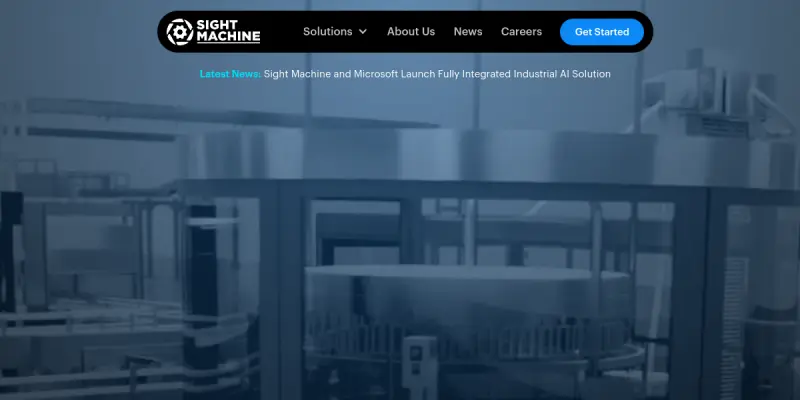
Screenshots & Interface
Pros
- ✓ Unifies factory data into a single AI-ready foundation, eliminating silos.
- ✓ Pre-built AI agents reduce the need for custom coding.
- ✓ Rapid deployment within weeks accelerates time-to-value for manufacturers.
- ✓ Scalable architecture supports single-line and enterprise-wide implementations.
Cons
- × Cloud-based features require a reliable internet connection; offline functionality is limited.
- × Freemium tier restricts data volume and advanced analytics, potentially limiting larger operations.
- × Deployment success depends on the quality and consistency of existing factory data.
- × Enterprise pricing and documentation are not publicly available, requiring sales inquiry.
How to Use Sight Machine AI in Your Workflow
Integrating Sight Machine AI into your professional toolkit enhances efficiency by automating manual steps. By configuring it to suit your specific project requirements, you can optimize output quality and reduce project cycle times. Standard workflows involve testing the tool on simple tasks before scaling its use to complex operations.
Frequently Asked Questions
What is Sight Machine AI used for?
Sight Machine AI is a manufacturing analytics platform that unifies factory data into a single AI-ready foundation. It provides agents that connect, structure, and analyze plant-floor information for process optimization. The tool targets operations teams seeking to deploy AI-driven insights rapidly across production lines.
What is the pricing model for Sight Machine AI?
Sight Machine AI uses a Freemium pricing model.
What are the main advantages of Sight Machine AI?
The key benefits of Sight Machine AI include: Unifies factory data into a single AI-ready foundation, eliminating silos., Pre-built AI agents reduce the need for custom coding., Rapid deployment within weeks accelerates time-to-value for manufacturers., Scalable architecture supports single-line and enterprise-wide implementations..
What are the main limitations of Sight Machine AI?
Some limitations or cons of Sight Machine AI are: Cloud-based features require a reliable internet connection; offline functionality is limited., Freemium tier restricts data volume and advanced analytics, potentially limiting larger operations., Deployment success depends on the quality and consistency of existing factory data., Enterprise pricing and documentation are not publicly available, requiring sales inquiry..
Alternative AI Tools
E2open AI
E2open AI optimizes global supply chains using predictive analytics for manufacturing. It automates logistics and inventory planning to reduce costs. Designed for enterprise operations.

Ivalua AI
Ivalua AI provides procurement software that helps manage spend and supplier relationships on a unified source-to-pay platform. It is designed for procurement teams in mid-to-large enterprises. A key differentiator is its use of AI to automate and optimize procurement workflows.

National Instruments AI
National Instruments AI provides automated test and measurement systems for engineers and manufacturers. It leverages AI to optimize testing workflows and improve product quality in industrial settings.
Rating Details
Based on 0 ratings
Related Tools
More AI tools from the same workflow, industry, or category.
fr3n
fr3n is a creator platform that combines a link-in-bio page, digital storefront, community spaces, and newsletters into one hub. It helps creators sell digital products, run memberships, and build an audience with first-party data.
Aveva AI
Aveva AI optimizes industrial processes and predictive maintenance by leveraging AI models to detect anomalies and support risk-based decision-making in manufacturing.
Paddle AI
Paddle AI streamlines billing, tax compliance, and revenue management for digital businesses. This SaaS platform automates financial operations, supporting global revenue generation for apps like n8n and AdGuard. It integrates essential payment processing tools into a single interface.
Honeywell Forge AI
Honeywell Forge is an industrial IoT platform that combines digital twin technology with AI to optimize facility operations. It is designed for industrial manufacturers seeking predictive maintenance and operational efficiency.
Reviews
No reviews submitted yet. Be the first to share your experience.
Write a Review
Share Your Experience
Join the community to write reviews, submit ratings, and bookmark your favorite AI tools.