
Open-source AI used to play catch-up.
Each new release narrowed the gap with proprietary models, but there was usually a noticeable difference in reasoning quality, coding ability, or general performance. Organizations accepted that tradeoff in exchange for greater control, lower costs, or deployment flexibility.
That assumption is becoming harder to defend.
Recent open-weight models have demonstrated increasingly competitive performance across software engineering, reasoning, and multilingual tasks. Releases such as Moonshot AI's Kimi K2 illustrate how quickly the ecosystem is evolving, but they are only one example of a broader trend.
The conversation is no longer about whether open-source AI can compete.
It's about whether proprietary models still provide enough additional value to justify their operational constraints.
Performance Is Becoming Less of a Differentiator
Every major AI release still arrives with benchmark charts.
Coding evaluations, reasoning tests, and mathematical performance remain useful indicators of technical progress. They show how quickly models are improving and provide a common language for comparison.
But for engineering teams deploying AI in production, benchmark leadership has become increasingly temporary.
A model leading one evaluation today may be surpassed within weeks.
More importantly, real-world development rarely resembles standardized benchmarks.
Organizations care about questions such as:
- Can the model understand our codebase?
- Does it integrate with our development tools?
- Can it be deployed securely?
- How predictable are operating costs?
- Can it be customized for our workflows?
As these practical considerations become more important, incremental benchmark gains matter less than operational fit.
The competitive advantage is shifting away from raw capability and toward deployment strategy.
Control Has Become a Strategic Requirement
Many organizations adopted proprietary AI because it consistently delivered the strongest performance.
Now that high-performing open models are emerging, other priorities are moving to the forefront.
Enterprise teams increasingly evaluate AI platforms based on:
- deployment flexibility
- compliance requirements
- data residency
- auditability
- governance
- customization
- long-term cost predictability
Open-source models offer advantages that proprietary APIs often cannot.
Organizations can choose where models run, determine how data is handled, fine-tune models for specialized domains, and integrate AI into existing infrastructure without depending entirely on a single vendor.
For regulated industries or organizations with strict security requirements, these operational benefits may outweigh modest differences in benchmark performance.
The decision is becoming less about capability and more about control.
Parameter Counts Don't Build Better Products
Large parameter counts continue to generate headlines.
They demonstrate engineering ambition and often signal advances in model architecture. But parameter count has become an increasingly poor proxy for practical value.
Developers rarely ask:
"How many parameters does this model have?"
Instead, they ask:
- Does it complete tasks reliably?
- Is latency acceptable?
- Can it handle large repositories?
- Does it fit our infrastructure?
- Is the documentation strong?
- Does it support our preferred tools?
The ecosystem surrounding a model often determines its usefulness more than the model itself.
SDKs, APIs, deployment options, evaluation frameworks, community support, and integration with modern development workflows all contribute to successful adoption.
The best model on paper isn't always the best model in production.
The Economics of AI Are Changing
As more capable open models enter the market, pricing pressure is increasing across the industry.
This benefits organizations regardless of which deployment model they choose.
But cost discussions are also becoming more sophisticated.
Engineering leaders increasingly evaluate total cost of ownership rather than individual API prices.
That includes:
- infrastructure costs
- operational overhead
- engineering productivity
- maintenance effort
- vendor dependence
- scalability
An open-source model may require additional infrastructure expertise while reducing long-term licensing costs.
A proprietary service may accelerate deployment but introduce ongoing operational dependencies.
Neither approach is universally superior.
The right choice depends on an organization's technical capabilities, regulatory environment, and product strategy.
The Future Is Hybrid, Not Binary
The debate between proprietary and open-source AI is often framed as a competition with a single winner.
Reality is moving in a different direction.
Many organizations are adopting hybrid strategies.
They may use proprietary frontier models for complex reasoning, open models for internal tooling, specialized models for domain-specific applications, and smaller models for latency-sensitive workloads.
This approach allows teams to optimize for performance, cost, governance, and flexibility simultaneously.
Rather than asking which model is "best," engineering teams increasingly ask which model is best for a particular workflow.
That represents a more mature way of thinking about AI infrastructure.
Model selection is becoming an architectural decision rather than a popularity contest.
Final Recommendation
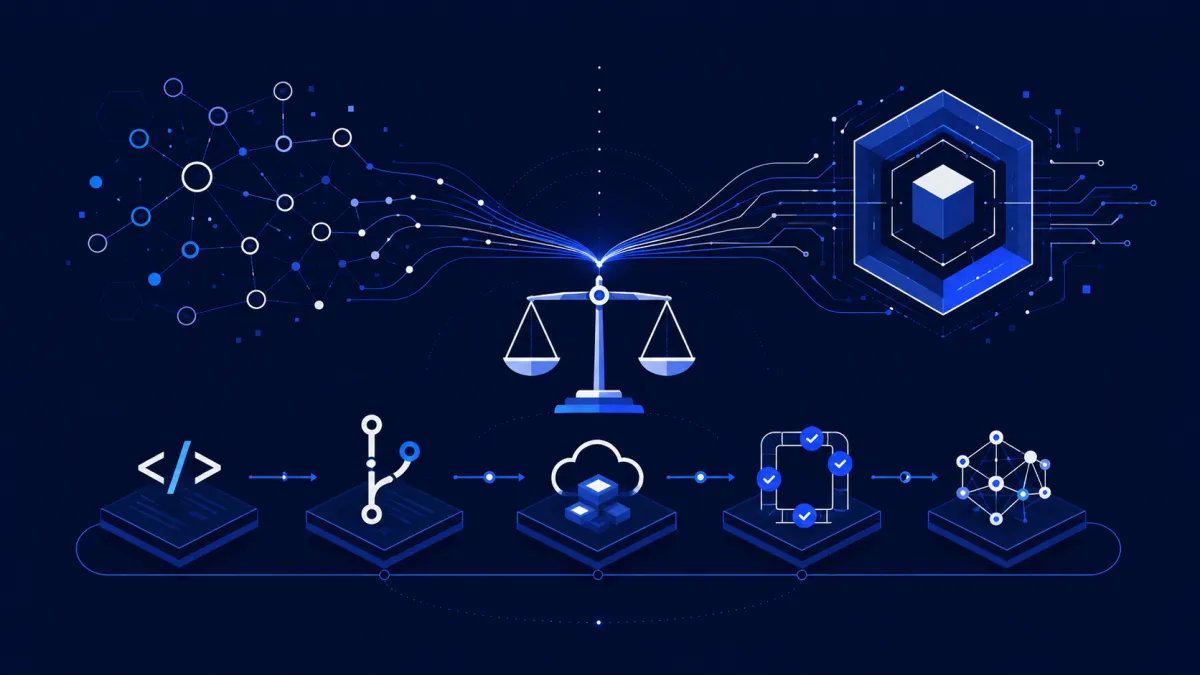
The significance of releases like Kimi K2 isn't that another open-source model has climbed a leaderboard. It's that the gap between open and proprietary AI is narrowing quickly enough to change how organizations evaluate their options.
For engineering leaders, the most important question is no longer whether open-source AI is capable. It's whether the remaining advantages of proprietary models justify their tradeoffs in cost, control, and deployment flexibility.
The organizations that benefit most from this shift won't simply chase the newest model release. They'll build AI strategies that balance performance with governance, adaptability, and long-term maintainability.
As open-source AI continues to mature, the conversation is moving beyond benchmarks. The future belongs to teams that choose models based on the problems they're solving—not the headlines they're generating.