Back to article categories
Article Category

AI Business & Industry

Understand how AI is changing companies, workplaces, industries, and digital markets. This category covers business adoption, organizational risks, emerging trends, workplace transformation, and the broader impact of AI.

LLMOps Explained: The Operational Framework Behind Production AI AI Business & Industry
Sep 27, 2026 • By Dave Dotio

LLMOps Explained: The Operational Framework Behind Production AI

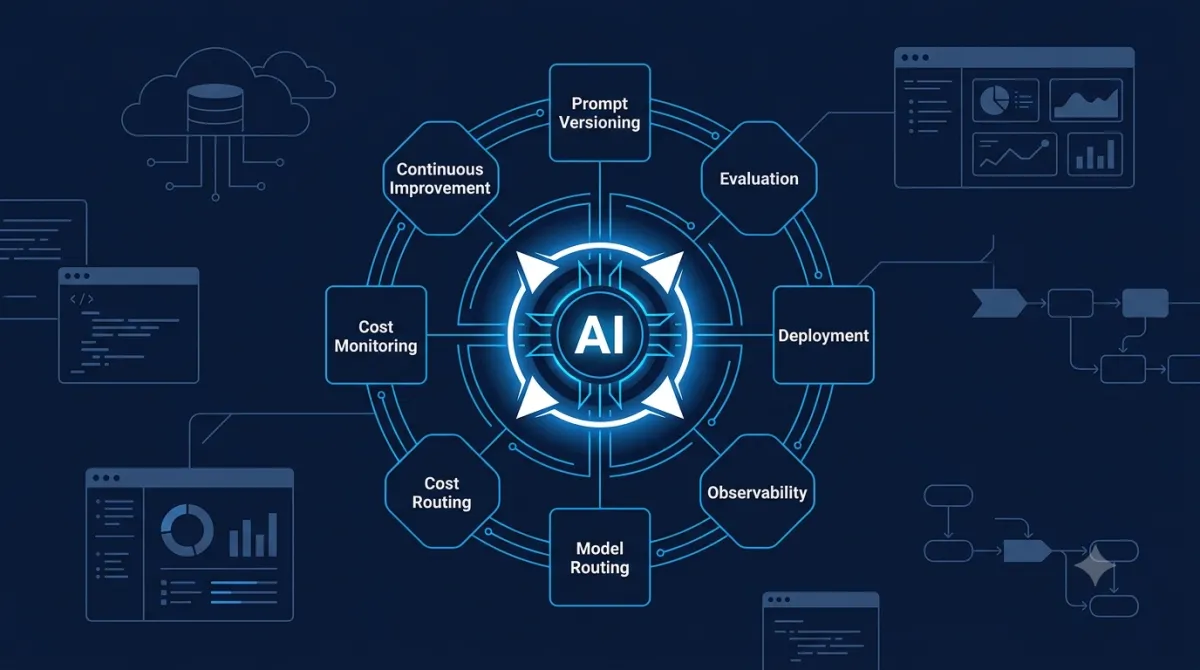
Building an AI application is only the beginning. The real challenge starts after deployment, when prompts evolve, models change, costs fluctuate, and thousands of users depend on consistent performance. Traditional software engineering has DevOps. Machine learning has MLOps. Large language model applications are giving rise to a new operational discipline: LLMOps. LLMOps isn't a single tool or framework. It's a collection of engineering practices for deploying, monitoring, evaluating, securing, and continuously improving AI systems in production. This guide explains what LLMOps is, how it differs from MLOps, and why it's becoming an essential capability for organizations building AI at scale.
Read full guide
AI Business & Industry
Sep 25, 2026 • By Dave Dotio

From Prompts to Policies: How Enterprises Are Standardizing AI Behavior

The first wave of enterprise AI focused on writing better prompts. The next wave is focused on ensuring every AI system behaves consistently, securely, and predictably. As organizations deploy AI across customer support, software development, sales, legal, and operations, prompt engineering alone is no longer enough. Teams need shared rules governing how AI should respond, what information it can access, which models it may use, and when human approval is required. These reusable policies are becoming a foundational layer of enterprise AI architecture, separating business governance from application logic. This guide explores why AI behavior is shifting from handcrafted prompts to centrally managed policies.

Read full guide
AI Control Plane Explained: The Missing Layer Between Models and Applications AI Business & Industry
Aug 02, 2026 • By Dave Dotio

AI Control Plane Explained: The Missing Layer Between Models and Applications

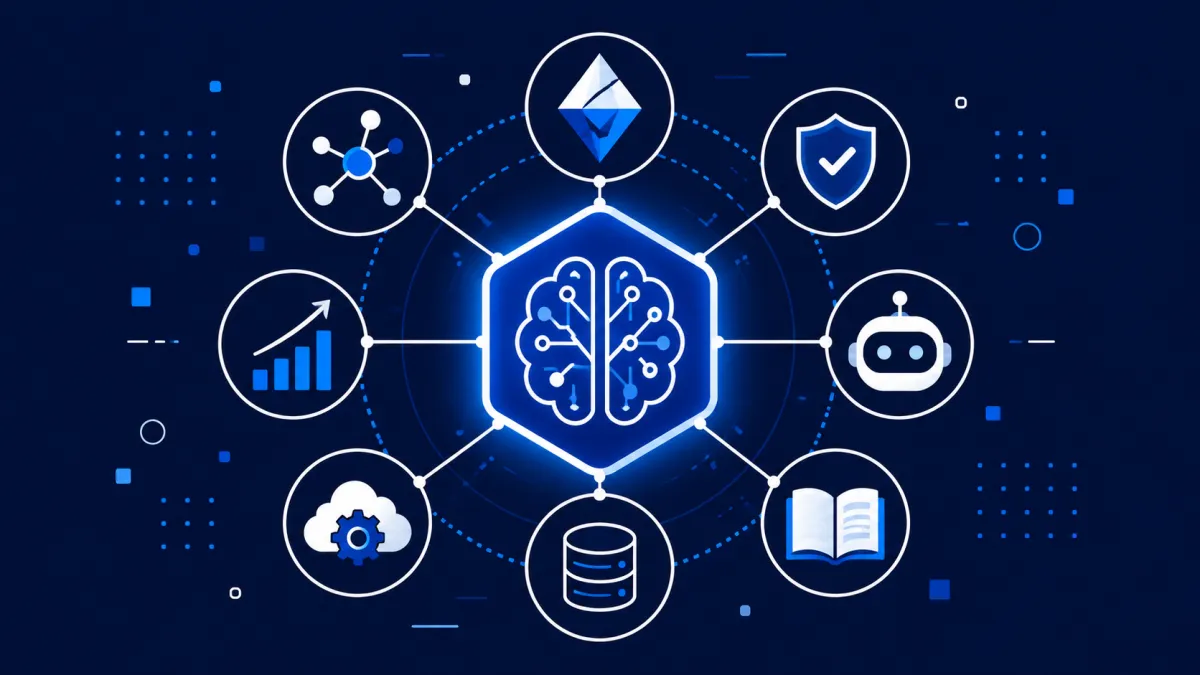
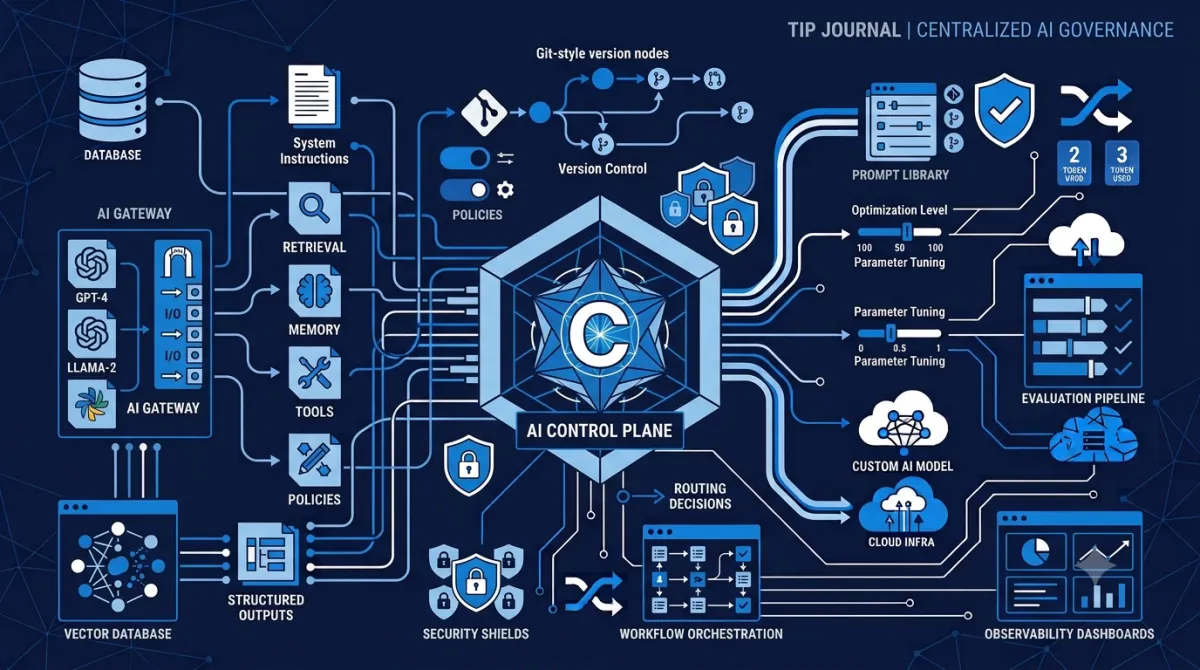
Enterprise AI stacks are becoming increasingly fragmented. A single application may rely on multiple language models, vector databases, retrieval systems, prompt libraries, evaluation frameworks, observability platforms, and security policies. Individually, each component solves a specific problem. Collectively, they create a new operational challenge: coordination. This is where the concept of an AI Control Plane emerges. Rather than replacing AI gateways or orchestration frameworks, an AI control plane provides centralized governance for the entire AI platform. It determines which models are available, how prompts are versioned, where requests are routed, how evaluations are performed, and how security and cost policies are enforced. This article explains why the AI control plane is becoming the architectural foundation of enterprise AI.

Read full guide
AI Gateway Explained: Why Every Company Needs One Before Scaling AI AI Business & Industry
Jul 29, 2026 • By Dave Dotio

AI Gateway Explained: Why Every Company Needs One Before Scaling AI

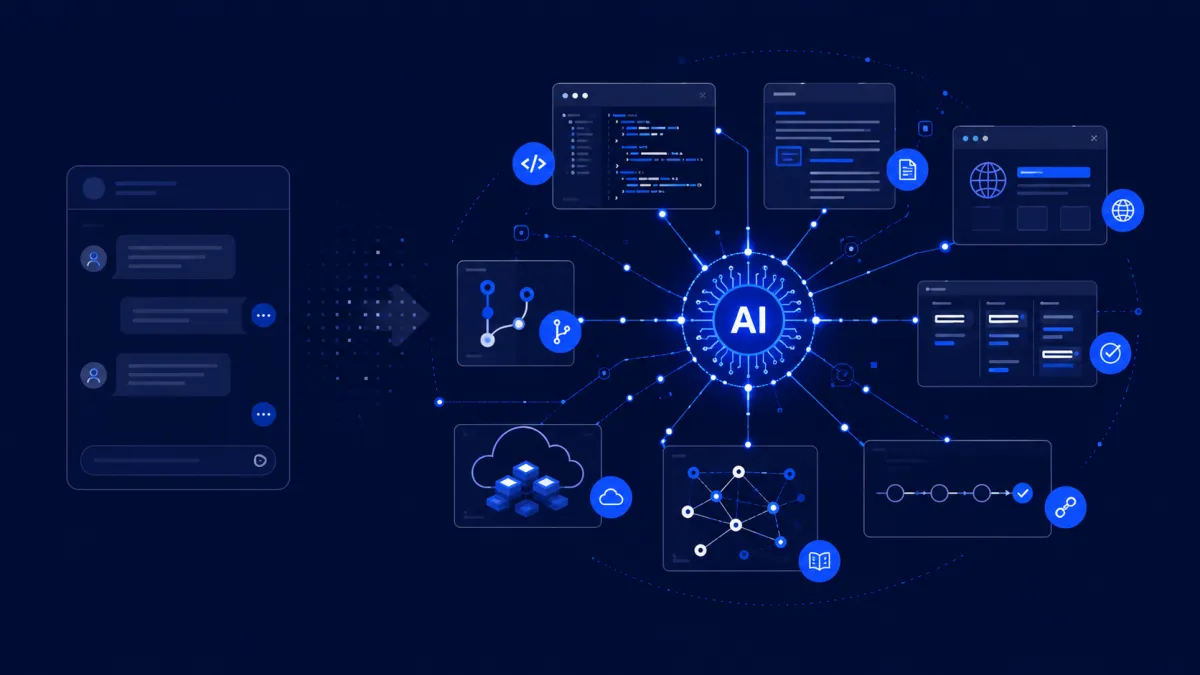
Most organizations start their AI journey with a single API key. A chatbot is launched, a coding assistant is integrated, and a few internal automations begin calling language models directly. It works—until it doesn't. As more teams adopt AI, every application develops its own authentication logic, prompt templates, model preferences, logging, and cost controls, creating an increasingly fragmented architecture. An AI Gateway addresses this problem by acting as a centralized control plane between applications and AI providers. Rather than replacing models, it standardizes how they are accessed, monitored, secured, and governed. This guide explains why AI gateways are rapidly becoming a foundational component of enterprise AI infrastructure and what engineering teams should evaluate before deploying one.

Read full guide
AI Infrastructure Is Getting Smarter And Smaller: 10 AI Breakthroughs That Matter This Week AI Business & Industry
Jul 17, 2026 • By Dave Dotio

AI Infrastructure Is Getting Smarter And Smaller: 10 AI Breakthroughs That Matter This Week

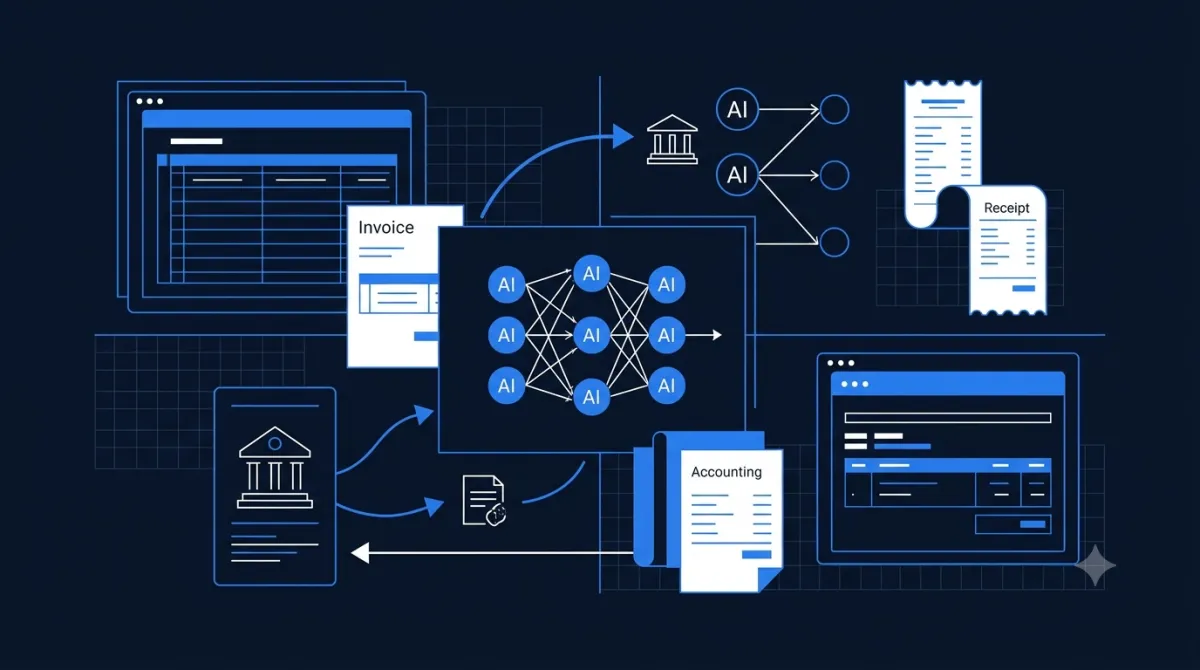
The biggest AI stories this week weren't about chasing larger models—they were about building better systems. From Thinking Machines Lab's open-weight Inkling model to OpenAI's automated red-teaming with GPT-Red, the industry's focus is shifting toward efficiency, robustness, and production-ready AI. This week's roundup explores the engineering lessons behind Comet's Opik optimization, IBM's research on model routing, Anthropic's latest agent safety findings, Canva's AI coding expansion, and groundbreaking papers on video generation and metacognition. Together, these developments reveal where AI infrastructure is headed—and what practitioners should pay attention to next.

Read full guide
The AI Employee Is a Myth. The AI Coworker Is Already Here. AI Business & Industry
Jul 10, 2026 • By Dave Dotio

The AI Employee Is a Myth. The AI Coworker Is Already Here.

For years, the AI industry has promised digital employees capable of replacing entire job functions. Product announcements increasingly describe AI that can reason, plan, collaborate, and complete complex tasks with minimal supervision. The vision is compelling—but it doesn't accurately reflect how most organizations create value with AI today. What's actually emerging is something more practical. AI isn't replacing employees; it's becoming a persistent coworker that participates in software development, research, content creation, and business operations. The organizations gaining the most from AI aren't those pursuing full autonomy—they're redesigning workflows around continuous human-AI collaboration.

Read full guide