
DeepSeek V4 Review: Is Peak-Valley API Pricing the Future of Enterprise AI?
The next battleground in AI isn't benchmark rankings—it's infrastructure economics.
Most organizations have already accepted that large language models can automate coding, document analysis, customer support, and internal workflows. The harder question is how to operate those workloads sustainably as token consumption grows from millions to billions each month.
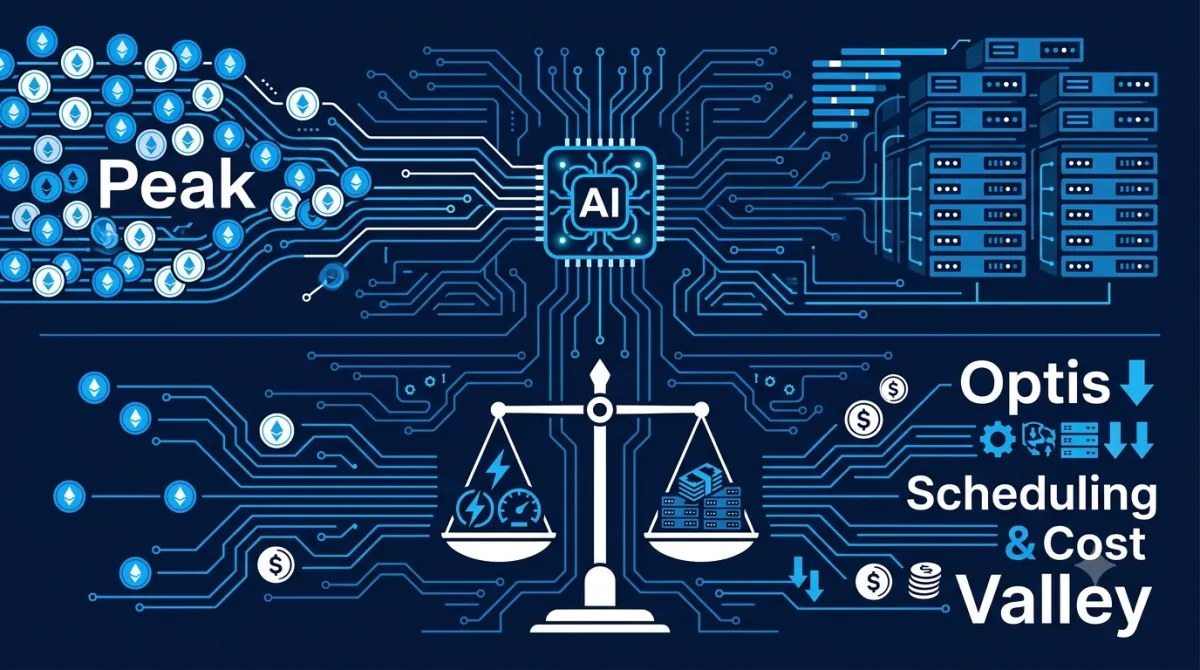
DeepSeek V4 approaches that challenge differently. Rather than competing solely on model performance, it introduces a peak-valley API pricing strategy that rewards teams for scheduling inference during lower-demand periods. According to TipJournal's July 2026 editorial intelligence, DeepSeek V4 launched in mid-July with this pricing model as one of its defining characteristics, making it one of the highest-priority topics for AI infrastructure practitioners.
The question is not whether cheaper AI is better. It's whether pricing-aware infrastructure changes how engineers design AI systems.
Why AI Infrastructure Costs Matter More Than Benchmark Scores
Benchmark leaderboards dominate social media because they are easy to compare.
Production systems are different.
Engineering teams evaluate questions such as:
- What will this model cost each month?
- Can costs be predicted accurately?
- Will pricing fluctuate under heavy demand?
- How difficult is it to optimize workloads?
For many organizations, inference costs quickly become one of the largest operational expenses in an AI stack.
As a result, selecting a model increasingly involves balancing capability, latency, reliability, and economics rather than chasing the highest benchmark score.
DeepSeek V4 reflects this shift by treating pricing as part of the product instead of an afterthought.
DeepSeek V4 Review: Understanding Peak-Valley API Pricing
Traditional AI APIs charge a fixed rate regardless of when requests are processed.
DeepSeek V4 introduces a different concept.
According to the Trend Intelligence Feed, the platform uses a peak-valley pricing structure, with different rates depending on demand periods. The objective is straightforward: encourage flexible workloads to run when infrastructure utilization is lower.
This approach resembles long-established pricing strategies used in cloud computing and electricity markets.
For AI developers, the implication is significant.
Not every inference request requires an immediate response.
Examples include:
- overnight document processing
- embedding generation
- large-scale dataset labeling
- scheduled report generation
- background code analysis
- internal knowledge indexing
These workloads could potentially be shifted to lower-cost execution windows without affecting end users.
Interactive chatbots and customer support agents, however, usually require immediate inference and therefore have less opportunity to benefit.
Where DeepSeek V4 Delivers the Most Value
The pricing model is unlikely to benefit every organization equally.
Teams with predictable, asynchronous workloads stand to gain the most because they can schedule processing around lower-cost periods.
Potential use cases include:
- enterprise document pipelines
- codebase indexing
- retrieval-augmented generation preprocessing
- synthetic data generation
- nightly analytics
- model evaluation jobs
Organizations operating continuous batch pipelines may realize meaningful infrastructure savings if orchestration systems can automatically schedule work based on pricing windows.
Conversely, applications requiring sub-second responses—such as live AI assistants or customer-facing chatbots—have limited scheduling flexibility. For these systems, model quality, latency, and reliability remain the primary evaluation criteria.
The key insight is that DeepSeek V4 introduces another optimization variable rather than replacing traditional performance considerations.
Looking Beyond Pricing: What Engineering Teams Should Evaluate
API pricing should never be assessed in isolation.
Before adopting any production model, engineering teams should evaluate several dimensions:
Model quality
Does it perform consistently on the organization's real tasks rather than benchmark datasets alone?
Latency
How quickly are requests processed under expected production load?
Reliability
What happens during traffic spikes or regional outages?
Developer experience
Are the SDKs, documentation, monitoring tools, and API ergonomics mature enough for long-term maintenance?
Operational complexity
Will scheduling workloads around pricing windows introduce orchestration overhead that offsets potential savings?
These factors often determine the total cost of ownership more than the advertised token price.
A Sign of Where the AI Market Is Heading
DeepSeek V4's pricing strategy reflects a broader industry trend.
Cloud infrastructure providers have long encouraged customers to optimize workloads around demand. AI infrastructure appears to be moving in the same direction.
As inference demand continues to grow, providers are likely to experiment with more sophisticated pricing models, including:
- dynamic capacity pricing
- reserved inference capacity
- workload scheduling incentives
- enterprise consumption tiers
If these models prove successful, AI architects may begin designing systems that are aware not only of latency and quality requirements but also of pricing conditions.
That represents a shift from "model selection" to "AI workload optimization."
Final Thoughts
DeepSeek V4 deserves attention not simply because it is another capable language model, but because it reframes pricing as an architectural consideration.
Its peak-valley API pricing encourages engineers to think differently about when workloads execute rather than only which model they use. For organizations with large asynchronous pipelines, that could translate into meaningful operational savings. For latency-sensitive applications, however, the benefits may be limited.
This DeepSeek V4 review suggests that the model's long-term impact may be less about outperforming competitors on benchmarks and more about influencing how the AI industry prices inference. As AI infrastructure matures, cost-aware orchestration could become as important as model selection itself.