
The Agent Stack Is Becoming an Open Standard—but Will It Be Interoperable?
Anthropic, OpenAI, Hugging Face, and Alibaba are placing key agent projects under shared governance. The opportunity is a more portable AI ecosystem. The hard part is making independently built components work together in practice.
The next problem in AI is fragmentation
Building an AI agent is no longer just about choosing a model and writing a prompt.
A production agent may need to communicate with tools, retrieve data, load specialized instructions, delegate tasks to other agents, execute code, and preserve state across a workflow. Each capability introduces another component, interface, or dependency.
The ecosystem is developing quickly, but not always coherently. Different frameworks expose different abstractions. Model providers offer different interfaces. Tool integrations vary in how they describe capabilities, return results, and handle errors. Execution environments impose their own constraints.
This creates a familiar software engineering problem: components that work independently do not necessarily work together.
On October 22, 2026, the Agentic AI Foundation (AAIF), hosted by the Linux Foundation, announced four new projects contributed by Anthropic, OpenAI, Hugging Face, and Alibaba. The projects cover agent skills, model interfaces, reinforcement-learning environments, and secure execution. Their addition brought the foundation's portfolio to 10 projects in its first year.
The announcement matters because these projects are moving into a shared, vendor-neutral governance structure. But the larger question is whether common stewardship can translate into practical interoperability across the agent stack.
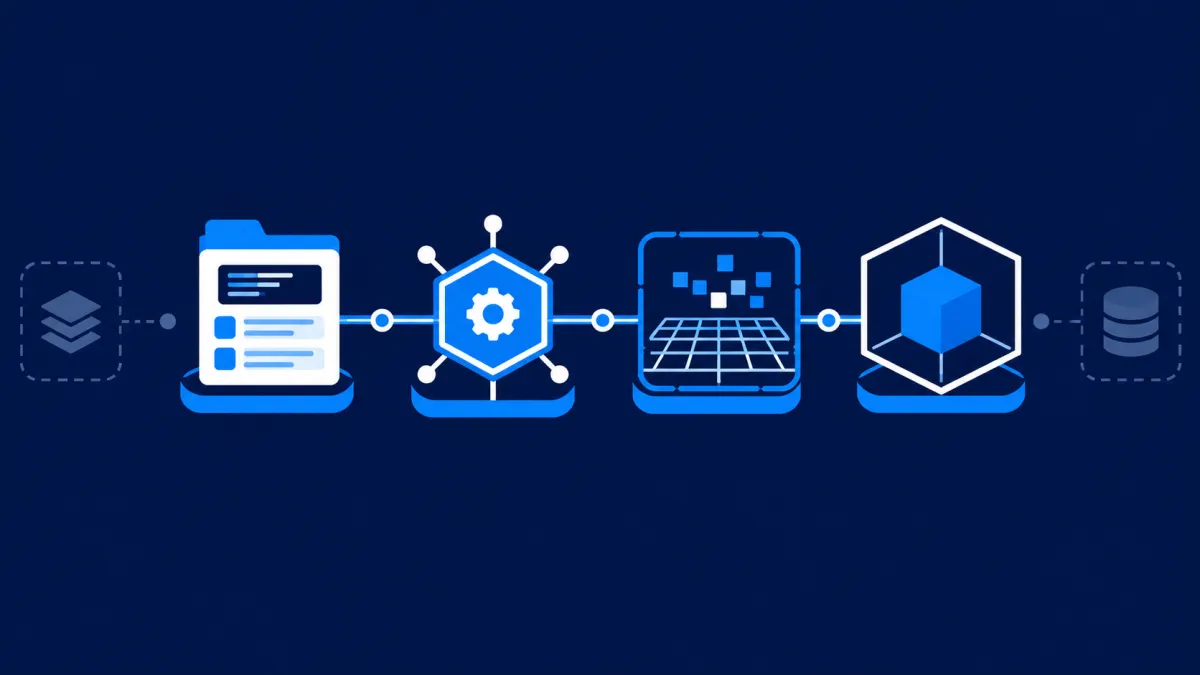
Four projects, four different layers
The new additions address different problems. They should not be treated as interchangeable standards or as a single, unified agent framework.
1. Agent Skills: making capabilities portable
Contributed by Anthropic, Agent Skills provides an open format for packaging instructions, scripts, and resources that an agent can load when needed.
Imagine a team that has developed a specialized workflow for reviewing a software repository. It includes conventions to follow, files to inspect, commands to run, and criteria for reporting findings.
Without a reusable format, the team may need to recreate that workflow separately for each agent product. A portable skill offers a way to package the relevant knowledge and supporting resources once, then make them available to compatible environments.
This separates task-specific expertise from the particular agent application that uses it.
However, portability of the package does not guarantee identical behavior. Different agents may interpret instructions differently, expose different tools, or impose different execution restrictions. A skill that assumes a particular command-line utility or permission model may still need adaptation.
2. Open Responses: making model interfaces more consistent
OpenAI contributed Open Responses, an open specification for multi-provider model interfaces based on the OpenAI Responses API.
Its stated goal is to provide a shared schema, consistent streaming events, and extensible tooling so applications can describe model interactions in a common format and use different providers with less translation.
This targets a familiar source of engineering overhead: application code becoming tightly coupled to one provider's API.
If the interface is sufficiently compatible across implementations, developers can reduce provider-specific integration code and make model substitution easier.
But a common request format does not make every model functionally equivalent. Providers differ in available tools, context limits, multimodal capabilities, output behavior, latency, and reliability. A request accepted by one implementation may not produce equivalent results—or even be supported—in another.
The specification can standardize the interface. It cannot erase differences between the systems behind it.
3. OpenEnv: making training environments easier to reuse
Contributed by Hugging Face, OpenEnv is an open framework and community hub for creating interoperable reinforcement-learning environments.
An agent needs more than a model to learn complex behavior. It also needs an environment in which it can take actions, observe outcomes, and receive feedback.
When training environments use incompatible interfaces, experiments and evaluation pipelines become harder to share. A common environment interface can make it easier to connect different agents, training libraries, and evaluation workflows.
OpenEnv is therefore aimed at the development and training layer rather than simply the interface used by a deployed assistant.
Interoperability here depends on more than whether two systems can exchange messages. The environments must also define meaningful actions, observations, termination conditions, and feedback consistently enough for a training or evaluation pipeline to use them.
4. OpenSandbox: standardizing where agents execute
Alibaba contributed OpenSandbox, a general-purpose sandbox platform for AI applications.
Coding agents and other tool-using systems often need to execute code, run commands, or interact with potentially untrusted inputs. Running those operations inside the main application process is an undesirable security boundary.
OpenSandbox provides unified sandbox APIs, multiple language SDKs, and Docker and Kubernetes runtimes for use cases including coding agents, GUI agents, evaluation, and code execution.
A common sandbox interface can make it easier to move execution workflows between compatible environments.
Yet a shared API is not the same thing as equivalent security. Isolation strength, network access, resource limits, credential handling, and cleanup behavior still depend on configuration and implementation.
A portable execution interface is useful only if developers understand what security guarantees the underlying runtime actually provides.
Source for the four project descriptions: Agentic AI Foundation announcement.
Interoperability is not one problem
The four projects reveal an important distinction: the agent stack contains several kinds of compatibility, and solving one does not automatically solve the others.
Consider an agent that uses a skill to inspect a repository, calls a model to decide what to do, runs generated code inside a sandbox, and then evaluates the result.
For the workflow to move between vendors or frameworks, several conditions must hold:
- Interface compatibility: Can the components exchange requests, responses, events, and tool results?
- Capability compatibility: Does the destination support the tools, modalities, and operations the workflow requires?
- Semantic compatibility: Do the same inputs and outputs mean the same thing across implementations?
- Execution compatibility: Can the workflow run with the expected dependencies, permissions, and runtime behavior?
- Security compatibility: Are trust boundaries, credentials, and permissions preserved when components are substituted?
- Operational compatibility: Can the system be monitored, debugged, versioned, and recovered consistently?
An open specification may address one or several of these layers. A complete agent workflow depends on all the relevant layers working together.
This is why the number of projects under a foundation is not a useful measure of end-to-end interoperability by itself.
Shared governance helps—but it is not a compatibility test
Moving a project into a vendor-neutral foundation can create better conditions for collaboration.
It gives outside developers a place to contribute, creates a framework for shared stewardship, and reduces the risk that a project's direction is determined entirely by one company's priorities.
That matters when the technology is intended to connect products from competing vendors.
The AAIF already hosts projects such as the Model Context Protocol (MCP), the Agent2Agent (A2A) protocol, AGENTS.md, goose, agentgateway, and Agent Router. The new additions broaden the range of agent-related capabilities represented under the foundation.
But governance and implementation are different things.
A project can have an open specification while implementations support different subsets of it. Vendors can adopt the same protocol but interpret optional features differently. A framework can advertise support for a standard without implementing every relevant behavior.
These are ordinary problems in standards adoption, not reasons to dismiss open standards.
They do mean that interoperability needs to be demonstrated through implementation, testing, and maintenance—not inferred from an announcement.
The real test is whether developers can switch components
Consider a practical scenario: a company builds an internal research agent that uses a model API, a reusable research skill, several external tools, and an isolated environment for processing documents.
The company later wants to change its model provider or move the agent to a different runtime.
If the stack is portable, the team should be able to replace the relevant component without rewriting the entire application. The skill should remain usable where supported, the model request should map cleanly to the replacement provider, and the execution environment should preserve the required behavior and security controls.
In reality, the migration may reveal hidden assumptions:
- The original model supports a tool-calling pattern that the replacement handles differently.
- The skill depends on a file path or executable that is missing in the new environment.
- Streaming events arrive in a different order or carry different metadata.
- The new sandbox blocks network access that the workflow previously relied on.
- A previously optional feature turns out to be essential to task completion.
The value of interoperability is measured by how many of these differences can be handled through documented configuration and adapters rather than application rewrites.
That is a much more demanding test than checking whether two products both claim to support the same specification.
What developers should evaluate before adopting these standards
The right response is neither to wait for perfect standardization nor to assume that every open project is immediately production-ready.
Teams can evaluate the standards incrementally.
1. Identify the boundary you want to standardize.
Do not introduce a new protocol simply because it exists. Determine whether your actual problem is provider-specific model code, duplicated skills, inconsistent tool access, incompatible training environments, or unsafe execution.
2. Build a small cross-implementation test.
Choose two genuinely independent implementations of the relevant specification. Run the same representative workflow through both. A test that only exercises one implementation proves little about interoperability.
3. Test behavior, not just successful requests.
Verify streaming, tool invocation, structured outputs, errors, cancellation, timeouts, and retries where relevant. For execution environments, test permissions, resource limits, isolation, and cleanup.
4. Make compatibility explicit.
Record which specification version and features each dependency supports. Treat optional capabilities as optional until verified. Avoid assuming that a shared interface implies identical model behavior.
5. Measure the cost of switching.
Track provider-specific adapters, compatibility patches, duplicated integrations, and regression tests. The point of standardization is to reduce long-term coupling—not merely to replace one dependency with another.
6. Keep a fallback plan.
A young standard can evolve. Keep critical application logic separate from the protocol layer and define what happens when an implementation is missing a required feature or changes behavior after an upgrade.
These practices make it possible to benefit from open standards without betting the entire application on their maturity.
What remains outside the standards
Even a well-standardized agent stack will not remove every reason to choose one provider or platform over another.
Models still differ in reasoning ability, cost, latency, multimodal support, and reliability. Agents still need product-specific policies, authorization rules, business logic, and domain knowledge. Enterprise deployments still require identity management, observability, auditing, data governance, and operational ownership.
Standards can define how components communicate and what behaviors they expose. They do not decide which model is appropriate for a task, whether an agent should be allowed to perform an action, or whether the resulting output is correct.
Those remain engineering and product decisions.
There is also a practical incentive problem. Vendors benefit when developers can build on their products, but they may also benefit when applications become dependent on proprietary features. A standard's long-term value therefore depends on meaningful implementation support, not only public endorsement.
The direction is promising; the proof comes later
The Agentic AI Foundation's expansion is a useful signal that the industry recognizes fragmentation as an infrastructure problem.
Agent Skills, Open Responses, OpenEnv, and OpenSandbox target distinct parts of the agent lifecycle. Their shared governance creates an opportunity for developers and vendors to build on common foundations instead of repeatedly solving the same integration problems in isolation.
But open standards are a means, not the outcome.
The outcome is an agent system whose components can be replaced, tested, secured, and maintained without unnecessary rewrites or hidden behavioral surprises.
The next milestone is not another list of projects joining a foundation. It is evidence that independent implementations work together reliably on real tasks.
The agent stack does not need one framework to rule them all. It needs well-defined boundaries, interoperable implementations, and tests that prove the boundaries hold.
Sources and further reading
- Linux Foundation — Agentic AI Foundation announces four new projects (October 22, 2026). Primary source for the announcement and project descriptions.
- Agentic AI Foundation — Official announcement. Project context and the foundation's stated goals.
- The Register — Vendor-affiliated AI agent tech gets adopted by a neutral foundation (October 23, 2026). Additional reporting on the governance implications and the projects' origins.